Tuesday, February 9, 2016

Fifth Sunday of Ordinary Time


One of the things the Lord reminds us of in today’s readings is that Christianity is real. Unlike many religions or philosophies, Christianity is deeply anchored in history: in time and space. Whereas some belief systems are about getting reality around me to fit into my idea, Christianity is first of all a reality, a real part of our time and space, which then affects our heart, and the way we see the world, and, ultimately, reality.
Today’s readings are littered with references to the action of God in time and space.  It’s true that our first reading doesn’t seem that grounded: one might be tempted to wonder  to what extent the billowing clouds of Isaiah’s visions are more from something he is  smoking rather than pure inspiration. Yet Isaiah’s vision is grounded enough to be able to be located in a concrete place in history: In the year of King Uzziah’s death.
St Paul does exactly the same thing in the second reading: some people in Corinth are a bit worried that Paul’s been taking this whole Jesus-Resurrection thing too literally: surely
Jesus was just a good man who built community, whose apostles either told lies about him or got conned by him. St Paul is unshakeably clear: Jesus did not just appear privately to an evangelist and dictate the gospel to him. Rather the risen Jesus appeared first to Cephas and secondly to the Twelve. Next he appeared to more than five hundred of the brothers at the same time, most of whom are still alive, though some have died; then he appeared to James, and then to all the apostles; and last of all he appeared to me too. In other words: the Risen Jesus is public history: and, since he is risen, is public present and future too.
And of course there is today’s Gospel. Christianity is so real that the almighty Son of God makes an appearance in the last place anyone would expect: on the smelly fishing trawler of a middle class businessman. And this is when the most real thing of all happens: Jesus asks him to do something he doesn’t want to do. Peter doesn’t want to do it not because its immoral, or too far fetched, or even pointless. The thing that Jesus asks Peter to do is something hard - ­something in fact Peter knows he should do but will find hard.
For this is what we mean when we say Christianity is real. It affects my daily life.  Christ’s Body the Church does not ask me things above and beyond of what I think I should do, but rather hard things that, deep down, I know really I should be doing. Taking that little bit of extra patience with my persistent child ­- or parent or spouse or mother-in-law.  Going to Sunday mass even if its my only day off and the priest is too boring - or provocative.  Receiving my spouse’s fertility as a gift. All these things where Christianity is not so much about big gestures which make me feel good, but principally small, tiny gestures of love towards those God has put in my life: because he is doing them all the time for me.
Its also why Christianity affects our politics. Because Christianity is real, and true, and part of the fabric of the universe, its not surprising that politicians and policies with Christianity behind them can often be far more rational, scientific, human and compassionate than some of the truly irrational, unscientific and heartless fads that sometimes come from self-­proclaimed purely rational people. This is not surprising: it is irrational to be purely rational ­- because human beings are more than a bit of logic. Each of us is an absolutely unique complex and mistake-­prone combination of head, heart, memory, emotion, body and senses. And it is people, and not body parts, that we elect to represent us. Political parties know that and so don’t post up pictures of someone’s arm or willpower. This is why a good Christian politician doesn’t shut away his Christianity every time a moral issue comes up: rather, like anybody else, he assesses the situation using the light his Christianity sheds on the problem. This upcoming election year is a chance for us to take stock of who in parliament acts in integrity of their beliefs ­ and those who don’t: and to vote accordingly.

The Editor

Saturday, September 19, 2015

10 October @8pm Love and Truth in Sydney


Married?  Engaged?  Going out?  Love and Truth are different evenings organised to bring together couples to learn, share and grow through the challenges and joys of relationship and married life - over select cheeses and complimentary fine wines!

The next Love and Truth evening in Sydney will be on 10 October 2015 starting from 8pm.  For more details, or to rsvp, please contact the co-ordinators at loveandtruthsydney@gmail.com or download the flyer here.

Thursday, June 18, 2015

7 July @8pm Love and Truth in Sydney


Married?  Engaged?  Going out?  Love and Truth are different evenings organised to bring together couples to learn, share and grow through the challenges and joys of relationship and married life - over select cheeses and complimentary fine wines!

The next Love and Truth evening in Sydney will be on 7 July 2015 starting from 8pm.  For more details, or to rsvp, please contact the co-ordinators at loveandtruthsydney@gmail.com or download the flyer here.

Monday, April 13, 2015

What is Divine Mercy?


This Sunday, all over world, we are beginning the feast of Divine Mercy. But this year, we are doing it with something we have never done before. Today Pope Francis has officially announced the details of a Year of Mercy which will begin on 8 December which is not only the Feast of the Immaculate Conception of the Virgin Mary, but also the fiftieth anniversary of the closing of Vatican II. During this year, all the Sunday readings will be taken from the Gospel of Luke, who is the “evangelist of mercy”, because so many of his parables are about mercy - like the lost sheep, the lost coin, and the prodigal son.

What is Divine Mercy? Divine Mercy is a fruit of God’s love. We heard something today about God’s love in today’s psalm: the psalmist writes it three times to make sure we don’t miss out this critically important message: ​Let the sons of Israel say:/‘His love has no end.’/Let the sons of Aaron say:/‘His love has no end.’/Let those who fear the Lord say:/‘His love has no end.’​God’s love doesn’t end. It also means that God’s love has no limits: it has no end, and it has no beginning either. Long before we woke up this morning, long before we even existed - for all eternity - God has been, and is, and will be preoccupied with us and loving us. There is a real security in this: in fact this is the only real security because while my job and family and spouse and health can change or disappear, God’s love never will. Ever.

What about God’s mercy then? God’s mercy is the aspect of God’s love where we recognise, in the light of the overwhelming warmth of such love, that we don’t deserve it. Be we Christian or non-Christian, none of us has the right to God’s love, or the right to be forgiven, or the right to eternal life. We are all sinners, and God would be perfectly in his rights to leave us in the squalor of the sins and evil and selfishness we have, many times, preferred to him.
But he didn’t do that to us, as he doesn’t do that to Thomas in today’s Gospel. What does Thomas say when he hears that Jesus didn’t abandon them but actually came back from the dead? “Unless I see the holes...I refuse to believe.” Thomas himself is wounded: bitter that God allowed his best friend to be unjustly condemned, angry too at himself for gutlessly abandoning his best friend at the first danger. His anger closed his heart and he refused to believe. What does Jesus say? “OK, I’ll leave you alone now.” No: rather, he meets Thomas where he is at. “Look,” he says: “here are ​my​wounds. I am wounded too. In fact, you did this to me. But don’t be afraid, because you can’t stop me loving you, and my Father permitted this so I can heal you with my wounds. Will you touch my wounds so I may heal yours?”

That is what Jesus says to us when we go to the sacrament of reconciliation. In that sacrament, Jesus asks “Where do you want to be healed? What evils have you done to yourself, and to others, and to our relationship? Show me where” That’s why we tell the priest our sins: not because ​he​is anything special, but rather for ​us​to recognise, and also ​to tell Jesus ​where exactly we need to be healed. It is no accident that it is only when the Risen Jesus shows his wounds that he orders his apostles to heal on his behalf and gives them that power: “‘Receive the Holy Spirit./For those whose sins you forgive,/they are forgiven;” This is why we make regular confession part of our Christian life: not because the priest is lonely and wants someone to talk to. But because mysteriously in the priest, Jesus is waiting there to heal and take away every evil and wound in our heart and fill it with a love and peace that no one else can ever give. As we receive the Risen Jesus in communion today, let us ask him for the grace to see his love for us, to see his wounds, and be healed by them. 

The Editor

Wednesday, February 25, 2015

A magnificent retreat of the priests of the Emmanuel Community


The second great international retreat of the priests of the Emmanuel Community was held from from the 9th to the 14th of February at the Foyer of Chairty of Chateauneuf-de-Galaure in France.

180 of the 250 priests of the community were present.  Bishops Yves le Saux and Dominique Rey were the preachers of the this retreat.  Beginning with the foundational graces of the Emmanuel Commuity and particularly from the humble figure of Pierre Goursat, they preached this retreat on the theme of pastoral charity and the priest of the Emmanuel Community today.

The week was an opportunity for priests coming from every continent to deepen the meaning of the fatherhood of a priest, and also what it means to be a brother as well as a son.

It was seen that to be a father is to give life in order to give one's life, to be close to others, to be a patient and benevolent witness, and also to have the courage of being faithful to the truth while at the same time giving the mercy of God to humanity.  To be a brother and a son, this is to accept  to depend, in a simple way, on others, whatever their state of life in the Church.

The Moderator of the Community and the Co-ordinator for priests concluded this beautiful retreat by encouraging the priests of Emmanuel to live community life in a free gift of self, in a communion of the states of life, there wherever they are.  They reminded them of the importance of welcoming the human fragilities and poverties of every person in order to exercise a real paternity which strengthens, encourages and raises up.

Some Fioretti:

"What is urgent is not so much to defend Catholic identity but to be missionary."
"The difficulty of fraternal life...is the brother!"
"To make a good decision requires a good night and a good mass."
"That which you want to light in the others must first be burning in you."
"Paternity is to move from giving life to giving one's life" (said by the father of a family)
"When we don't know where we're going we shouldn't be surprised if we arrive somewhere else!"
"Our little decisions work if they become supplications."
"When I hear my parish priest speak of the Gospel, this makes me afraid; when I see him live it, I am reassured."

Friday, January 23, 2015

New commitments in celibacy for the Kingdom of God

Commitments in Altotting.
As every year in the Emmanuel Community, a number of consecrated sisters of different nationalities have recently made a first or definitive commitment in celibacy for the Kingdom of God.*  They include:

 - Marie-Dominique Minne, French, first commitment, in Lisieux, on the 3rd January.
 - Marie-Rose Zerbo, of Burkina Faso, first commitment, in Lisieux, on the 3rd January.
 - Mili Banko, Slovenian, definitive commitment, in the Netherlands, on the 4th January.
 - Daniella Török, from Hungary, in Altötting, Germany.
 - Anna Galikova, from Slovakia, in Altötting, Germany.
 - Silvia Ponte, Portugese, in Fatima on the 28th December.
 - Claire de L’éprevier, French, in Lisieux on the 3rd January.
 - Sophie-Marie Drouineau, French, in Lisieux on the 3rd January.

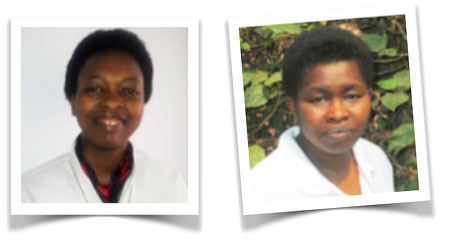
On the 1st March, Immaculée Kantengwa and Odette Niyibizi (below left to right) will make their first commitment in Kigali (Rwanda).

Let us pray for them!


(*) Celibacy for the Kingdom of God in the Emmanuel Community is a form of missionary life according to the charism of the Community.  In renouncing starting a family, members of the community commited in celibacy live a more complete personal disposition for adoration, compassion and evangelisation.  Today there are about 200 men and women who live this call around the world.  Click here to see the video clip the Emmanuel Community has prepared on the occasion of the opening of the Year of Consecrated Life (+16 000 views), and here to know about more consecrated life in the Emmanuel Community. 


Commitments in Lisieux.

Sunday, August 17, 2014

Evening for couples coming up in Melbourne and Sydney


Love and Truth has organised an evening for married or engaged couples in Melbourne on 30 August and in Sydney on 13 September.

In Melbourne in Burwood the Emmanuel Community welcomes married and engaged couples for a relaxing and enjoyable wine and cheese evening.  The topic of the evening is "Holy Husbands and Wives in History...Inspiring us today."  Further details, including about how to RSVP, can be found on the flyer when you click here.

In Sydney the evening will be held in Croydon Park on Saturday 13 September.  The evening will include a very nourishing variety of wine and cheese, as well as discussion about "Embracing your Spouses’ Family".  Further details, including about how to RSVP, can be found on the flyer when you click here.

Sunday, June 15, 2014

Rome School of Mission posts new promo video.

18 Students.
13 countries of origin.
9 months of intellectual, spiritual, human and mission formation. 
Must be this year's ESM promo video.


Sunday, May 4, 2014

St Peter's Square Way of the Cross by ESM students


How to evangelise today?  On Good Friday the students of the Emmanuel School of Mission in Rome prepared and acted out the Stations of the Cross in the most public place of the city of Rome, St Peter's Square.  Seen by thousands of international tourists from all over the world, the students shared with those around them the reality of the suffering and death of Jesus Christ and its importance at the very heart of their own lives.  You can enter into their proclamation by checking out the 6 minute video on Youtube.  Indeed, Resurrexit!

Sunday, April 27, 2014

Love and Truth in Sydney 3 May 8pm

Married?  Engaged?  Going out?  Love and Truth are different evenings organised to bring together couples to learn, share and grow through the challenges and joys of relationship and married life - over select cheeses and complimentary fine wines!

The next Love and Truth evening in Sydney will be Saturday 3 May starting from 8pm.  For more details, or to rsvp, please contact the co-ordinators at loveandtruthsydney@gmail.com.

Monday, April 7, 2014

Zacchaeus course starting in Sydney 30 April 2014

New in Sydney this year, the Emmanuel Community is launching the Zacchaeus Course starting on 30 April.

The Zacchaeus course is for any person seeking to live out the relationship to their work, the common good, property and the poor and underprivileged in a more fully integrated way.  Based on the social teaching of the Catholic Church, each week's presentation is followed by guided exercises on the theme of the presentation to be put into practice during the weeks that follow.  In this way, Zacchaeus does not remain a merely intellectual exercise, but rather an opportunity to grow and really change the world where we are.

While requiring a certain level of commitment, those following the course will only need to meet together once every fortnight.  Based at Homebush Public Library, the course will beginning on the 30 April at a one-off cost of $50.

For more details, please contact us via email on zacchaeussydney@gmail.com.

Thursday, February 6, 2014

"Think big! Open your hearts" Francis says to world's youth

(Source: holyfamilyjmj.org)
Pope Francis to Young People: "Think Big! Open Your Hearts"
Holy See Releases Pontiff's Message for the 29th World Youth Day

Vatican City, February 06, 2014 (Zenit.org) | 250 hits

The Holy See today published Pope Francis’ message for the 29th World Youth Day (WYD), which will take place on Palm Sunday, April 13. The theme for this year’s event is based on an excerpt from the Beatitudes: “Blessed are the poor in spirit, for theirs is the kingdom of heaven”.

World Youth Day, which was initiated by Blessed John Paul II in 1984, is celebrated annually on a diocesan level and internationally every two to three years. Pope Francis attended the international WYD last year in Rio de Janeiro, Brazil, in his first international apostolic journey as Pontiff. The final Mass of the event was attended by over 3.5 million youth from around the world.

“How vividly I recall the remarkable meeting we had in Rio de Janeiro for the Twenty-eighth World Youth Day,” the Pope’s message stated. “It was a great celebration of faith and fellowship! The wonderful people of Brazil welcomed us with open arms, like the statue of Christ the Redeemer which looks down from the hill of Corcovado over the magnificent expanse of Copacabana beach. There, on the seashore, Jesus renewed his call to each one of us to become his missionary disciples.”

The Holy Father began his message by reflecting on the Beatitudes, which he said were “new and revolutionary” in presenting “a model of happiness contrary to what is usually communicated by the media and by the prevailing wisdom.”

“A worldly way of thinking finds it scandalous that God became one of us and died on a cross! According to the logic of this world, those whom Jesus proclaimed blessed are regarded as useless, 'losers.' What is glorified is success at any cost, affluence, the arrogance of power and self-affirmation at the expense of others,” he wrote.

The Pope went on to call on the youth of the world to resist the enticements that present a false illusion of happiness. In doing so, one risks settling for less and “thinking small," he said.

“Think big instead! Open your hearts!” the Pope wrote.

John Paul II

In a communique released by the Pontifical Council for the Laity, the Holy Father’s message is presented as an invitation to young people to imitate Jesus in their own lives, like Saint Francis of Assisi.

“Young Christians are therefore called to conversion, to embrace an evangelical lifestyle, one of moderation in which we seek the essential and act in solidarity with the poor,” the communique stated. “The Pope explains that the poor are both the 'suffering flesh' of Christ that we are all called to personally touch, and they are also true masters of life, often with much to offer on the human and spiritual plane.”

Concluding his message, Pope Francis reminded the youth that this year will mark 30 years since Pope John Paul II entrusted the World Youth Day cross to the youth. The upcoming canonization of the late Pontiff, he said, will be an event marked by great joy.

“He will be the great patron of the World Youth Days which he inaugurated and always supported,” the Pope wrote. “In the communion of saints he will continue to be a father and friend to all of you.”

World Youth Day 2016 will be held in Krakow, Poland, where Blessed John Paul II served as Cardinal prior to his election to the papacy. (J.A.E.)
(February 06, 2014) © Innovative Media Inc.

Tuesday, January 28, 2014

Francis: "The joy of praise leads us to the joy of the feast"

(Source: sandyfordparish.org)
Reflecting on the episode from the Second Book of Samuel, which was read at Mass, in which “David danced with all his might before the Lord,” Pope Francis recalled that the whole people of Israel were celebrating because the Ark of the Covenant was returning home. He went on to say that David’s prayer of praise, “led him to move beyond all composure,” adding, “this was precisely a prayer of praise.”

Explaining that the passage caused his thoughts to turn to Sarah, Abraham’s wife, who, after giving birth to her son, Isaac, said, “The Lord made ​​me dance with joy.” He said that it is easy to understand a prayer of petition – asking something of the Lord – and prayer of thanksgiving, as well. Even prayer of adoration, he said, “is not so difficult,” to understand. Prayer of praise, however, “We leave aside – it does not come to us so easily [It. Non ci viene così spontanea].”:

“‘But, Father! This is for the Renewal in the Spirit folks, not for all Christians!’ No: prayer of praise is a Christian prayer, for all of us. In the Mass, every day, when we sing the Holy, Holy, Holy ... This is a prayer of praise: we praise God for his greatness, because He is great. We say beautiful things to Him, because we happy for His greatness [It. perché ci piace che sia così]. ‘But, Father! I am not able...I have to...’ Well, you’re able to shout when your team scores a goal, and you are not able to sing praises to the Lord? To come out of your shell ever so slightly to sing [His praise]? Praising God is completely gratis. [In it] we do not ask [Him to give us anything]: we do not express gratitude for anything [He has given]; we praise [Him]!”

We need to pray “whole-heartedly,” he said. “It is also an act of justice, because He is great! He is our God.” David, Pope Franics went on to observe, “was so happy, because the ark was returning, the Lord was returning: his body, too, prayed with that dance.”:

“[Here is] a good question for us to pose to ourselves today: ‘But how am I doing vis à vis prayer of praise? Do I know how to praise the Lord? Do I know how to praise the Lord when I pray the Gloria or the Sanctus? Is my whole heart really in it, or do I merely mouth [the words]. What does David dancing here say to me, and Sarah, dancing for joy? When David enters the city there begins another thing: a party!”

“The joy of praise,” said Pope Francis, “leads us to the joy of the feast - the feast of the family.” The Pope went on to recall how, when David returned to the palace, Michal, the daughter of King Saul, scolded him and asked him if he did not feel ashamed for having danced like that in front of everyone, he, who is the king. Michal “despised David”:

“I wonder sometimes how many times we despise good people in our hearts, good people who praise the Lord as it comes to them, so spontaneously, because they are not cultured, because they do not follow the formalities? [I mean really] despise [them]? The Bible says that, because of this, Michal remained sterile for the rest of her life. What does the Word of God mean, here? [It means] that joy, that the prayer of praise makes us fruitful! Sarah danced in the great moment of her fecundity – at the age of ninety! The fruitfulness that praise of the Lord gives us, the gratuity of praising the Lord: that man or that woman who praises the Lord, who prays praising the Lord, who, when praying the Gloria is filled with joy at doing so, and who, when singing the Sanctus in the Mass rejoices in singing it, is a fruitful person.”

On the other hand, warned Pope Francis, “Those, who are closed in the formality of a prayer that is cold, stingy [It. misurata], might end up as Michal, in the sterility of her formality.” The Pope asked, then, [that we] imagine David dancing, “with all his might before the Lord,” and that, “we think how beautiful it is to make the prayer of praise.” It will do us good, he said, to repeat the words of Psalm 23, which we prayed today: “Lift up your gates, O ye princes, and be ye lifted up, O eternal gates: and the King of Glory shall enter in. Who is this King of Glory? The Lord of hosts, He is the King of Glory.”

(Source: http://www.news.va/en/news/pope-francis-at-daily-mass-the-fruitfulness-of-pra)

Wednesday, January 15, 2014

Adoration weekly in Sydney starting 30 Jan 2014

From the 30th January 2014 the Emmanuel Community is organising silent adoration every Thursday evening from 8pm to 9pm in Sydney.

The address of the church is:

Our Lady of the Assumption Catholic Church
74 Underwood Rd
Homebush

"One day, having a little more leisure-for occupations confided to me left me scarcely any-I was praying before the Blessed Sacrament, when I felt myself wholly penetrated with that Divine Presence, but to such a degree that I lost all thought of myself and of the place where I was, and abandoned myself to this Divine Spirit, yielding up my heart to the power of His Love. He made me repose for a long time upon His Sacred Breast, where He disclosed to me the marvels of His Love and the inexplicable secrets of His Sacred Heart, which so far He had concealed from me. Then it was that, for the first time, He opened to me His Divine Heart in a manner so real and sensible as to be beyond all doubt, by reason of the effects which this favor produced in me, fearful, as I always am, of deceiving myself in anything that I say of what passes in time. It seems to me that this is what took place:" 

"My Divine Heart is so inflamed with love for men, and for you in particular that, being unable any longer to contain within Itself the flames of Its burning Charity, It must needs spread them abroad by your means, and manifest Itself to them (mankind) in order to enrich them with the precious graces of sanctification and salvation necessary to withdraw them from the abyss of perdition. I have chosen you as an abyss of unworthiness and ignorance for the accomplishment of this great design, in order that everything may be done by Me." 

"After this He asked me for my heart, which I begged Him to take. He did so and placed it in His own Adorable Heart where He showed it to me as a little atom which was being consumed in this great furnace, and withdrawing it thence as a burning flame in the form of a heart, He restored it to the place whence He had taken it

St Margaret Mary, 27 December 1673. (Source: EWTN)

Sunday, January 5, 2014

How to change in 9 months: ESM Rome


9 months of Formation, Adoration, Compassion, Evangelisation - Transformation!

Applications for ESM Rome are now open here.

Wednesday, December 11, 2013

Fr Andrew Brinkman, priest in the Emmanuel Community

Fr. Andrew Brinkman (St. Paul/Minneapolis, MN) was born on the Huron River in Ann Arbor, Michigan. He studied at the University of Saint Thomas in the Saint John Vianney College Seminary in Minnesota. His majors were philosophy and Catholic Studies. He then spent a year with the Emmanuel Community in Namur, Belgium and then four years at the Saint Paul Seminary in Minnesota.

He has two older brothers and two younger sisters. He received his calling at the age of 9 when a friend of his dads came to their new home and said that one of the boys in our family had a vocation to the priesthood. At the moment the seed was planted and although he didn’t always want to be a priest he actually began to desire it after he met Jesus in the Eucharist. During his senior year of high school he began to pray before the Blessed Sacrament also known as Eucharistic adoration. This had a major impact on him.

He met the Emmanuel Community at a youth forum in Altötting, Germany. The forum was held one week prior to the 2005 World Youth Day events in Cologne, Germany. This was his first experience with the Emmanuel Community and he was touched by their joy and the witness of different states of life gathered into one family.

The Emmanuel Community helped him to realize that he could not be a good priest without the help of his brothers and sisters in community.

(Source: http://emmanuelcommunity.com/priests/priests-of-the-emmanuel-community/)

Tuesday, December 3, 2013

Prayer for particular vocations

Lord Jesus,

You have given rise to the Emmanuel Community to participate, in today’s world, in the Church’s evangelisation work for the salvation of all men.

We renew the gift of ourselves for the mission in the Emmanuel Community and we ask you to awake in our midst, in Australia, numerous vocations for priesthood and consecrated life, so your name can be announced and loved.

We ask this through the intercession of Mary the Virgin and Pierre Goursat, who wished so much to give holy vocations to the Church.

Amen.

Saturday, November 30, 2013

Pierre Goursat

Pierre Goursat was a Parisian and an evangeliser, born on 15 August 1914 in Paris.  He lived in the same city all his life.

His conversion happened when he was 19 years old, while he was undergoing treatment for tuberculosis. One day, he suddenly realised that he had stopped thinking about his brother Bernard, who was two years younger than him and who had died suddenly at the age of ten. It was as if his younger brother were telling him: “You do not think of me anymore because your heart has become hard; you have become proud.” Pierre fell on his knees at the foot of his sick-bed and at this moment he met Christ in a way that gave light to his whole life. Afterwards, he modified his way of living, filled with art and refinement. He decided to deepen his faith, to pray and to evangelise.

A lay adorer
During World War II, he met Cardinal Suhard, Archbishop of Paris, with whom he became close. Cardinal Suhard was one to the first people to observe the de-Christianisation of France and the need to re-evangelise the country. He also confirmed Pierre in his vocation as a layman: to remain in the world, to be an adorer of Jesus in the Eucharist, and to evangelise while being in the world.

In 1944, Pierre was able to escape a dangerous situation through the intervention of the Blessed Virgin Mary. After he met Jesus, he met Mary, his mother. Every year after that, he would go to Lourdes.

Engaged in the cultural world
During this period, he busied himself with evangelisation through books, magazines, and participation in the Catholic Circle of Intellectuals. He afterwards turned towards cinema, as he saw the importance of this new art form. He became the friend and sometimes the counsellor of several directors and for ten years worked at the Secretariat of the National Film Office in France. However, he was always sick with tuberculosis and at times he could get out of his bed only to go to meetings.

In 1970, he retired to live a very simple life. His ardent desire to make Jesus known pushed him to gather young people to open themselves up to hope in God. This was how a young woman was converted, while he was reading to her the passage where Jesus says to the Samaritan woman: “If you but knew all that God gives …”

At another time, he helped writer, Maurice Clavel, to realise that the crisis which was troubling him was actually a search for God.

But what Pierre was doing in small things and in near obscurity would be transformed in a major event through the Charismatic Renewal. The outpouring of the Spirit would change everything, leading to innumerable conversions and the adventure of the Emmanuel Community.

A humble man
Pierre had a radical and simple humility. This humility allowed him to welcome different types of people. This richness at the beginning later flavoured the Community.

This humility allowed him to listen well to the Holy Spirit. It made his strong will completely available to the will of the Lord. Many people have told stories of the many times Pierre changed his plans after a time of prayer; or, how he changed his own ideas after another person showed him something better.

Free to love
“Original” as he was, Pierre was a free man. He was not imprisoned in structures. Although profoundly traditional, he was not at all conservative. He always wanted to create a new world and to move forward. He wanted to renew the Church, which he loved passionately. That is why he never let himself be stopped by minor or temporary problems.

He was also striking in his joy: joy in the presence of God, joy at the action of God, joy in living with brothers. Marthe Robin confirmed this one day when she said, “I will pray so that Emmanuel may evangelise with joy”.

All for God
A community, whatever it may be, will always retain some of the traits of the spiritual personality of its founder. Pierre had a rich personality. We would like to give some examples of this here.

Pierre was a man who completely gave of himself. He gave himself to God and to others without expecting anything in return. Little by little and especially towards the end of his life, he abandoned himself more and more, to God who is a God of love, God who is near.

Pierre was himself living the name of the Community: Emmanuel, God-with-us. He was the one who re-actualised the message of the Heart of Christ in Paray-le-Monial and Jesus’ call that men might become his friends.

Pierre did not have an indifferent heart. He was present to each person. In a spontaneous way, he would compassionately welcome the sufferings, the calls, the needs of others, especially his brothers in the Community. He offered to Christ, little by little, all that was entrusted to him. Adoration and compassion were inseparable.

Pierre felt a great compassion especially for those who did not know the Lord. There is no greater misery than spiritual misery. This is why Pierre talked without ceasing and with boldness about evangelisation, with everyone, even with the most simple of people. For him, Emmanuel existed to evangelise. Being a visionary, he was incredibly creative.

Friday, November 29, 2013

Who are we?

The Emmanuel Community is an association of the faithful of all states of life.

The Community takes its name from Scripture: “Behold! the Virgin is with child and will give birth to a son whom they will call Emmanuel, a name which means ‘God with us’” (Mt 1:23).

“Emmanuel” is “God with us” in our daily life.

It is for all to recognise Jesus as the centre of their life in order to be “in the world without being of the world.”

For some, this will mean seeking holiness in everyday life, in the family and at work; for others, in celibacy for the Kingdom; for others still, in a life dedicated full time to apostolic works.

The profound grace of the Community comes from Eucharistic Adoration of God: “Emmanuel”, truly present among us.

From this Adoration is born compassion for all who are dying of hunger, both materially and spiritually. From this compassion is born the thirst to evangelise throughout the entire world, especially among the poorest of the poor.

Abandon to the Holy Spirit, the Word of God, the intercession of Mary, Mother of God, the sacraments and liturgy, deeply establish the communal and apostolic life in the very life of the Church.